
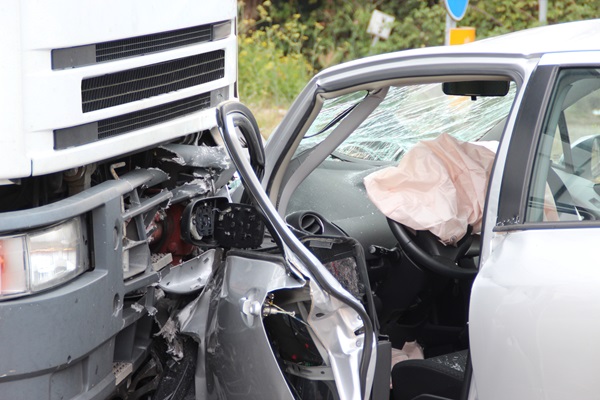
The Federal Government is Preparing a New Study To Fix Decades of Flawed Truck Crash Data
If you’ve ever driven alongside a semi‑truck on a highway, you know just how massive and intimidating these vehicles can be. When a big rig is involved in a crash, the consequences can be catastrophic, not just for the truck driver but for everyone around. Understanding why truck accidents happen is important for improving safety. Yet in 2025, government agencies and researchers still struggle to collect and analyze basic data about truck accidents. Here’s why the system is flawed and how a new study hopes to fix it.
You might assume that in an era of connected devices and instant data transmission, a comprehensive database of truck‑crash information exists. Unfortunately, it doesn’t. According to Land Line Media, there is no single national repository for crash data; only a handful of studies and disparate reports. That means researchers often rely on incomplete or inconsistent information, which makes it hard to draw reliable conclusions.
Data used to shape safety laws is often incomplete or misleading
One statistic often cited is that truckers aren’t at fault in 75–80 percent of crashes. While that figure comes from some studies, it’s often misquoted or misinterpreted. In reality, the causes of truck crashes are more varied. Collisions with passenger vehicles are only one factor; weather events, poor road design, mechanical failures, animal strikes, and driver fatigue all contribute. Without clear data distinguishing these causes, policymakers risk focusing on the wrong problems.
Another challenge is that crashes are investigated by many different law enforcement agencies at the state, county, and local levels. Each department may use its own forms and codes to record crash details. A “rear‑end collision” in one state might be coded differently in another. That lack of standardization makes it nearly impossible to combine data sets across jurisdictions. Additionally, investigators may accidentally choose the wrong code from a drop‑down menu or omit details altogether.
The Federal Motor Carrier Safety Administration (FMCSA) hasn’t ignored the problem; the agency has tried to study crash causes before. The most notorious effort was the Large Truck Crash Causation Study (LTCCS) published in 2006. This study was widely criticized for its methodology and definitions. Rather than pointing to true causes or fault, it focused on pre‑crash events and used statistical “relative risk” measures to identify a “critical event” and “critical reason” for each crash.
What can we expect from FMCSA’s upcoming study?
Recognizing the shortcomings of past efforts, FMCSA has proposed a new Large Truck Crash Causal Factors Study. Unlike its predecessors, this study promises several improvements. First, it will establish a centralized collection system for four types of truck‑crash data. One key component is the Heavy‑Duty Truck Study Initial Incident Form, a consistent form that all participating agencies must use. Standardization is also important. If every crash report uses the same codes and definitions, researchers can compare data across states and regions.
Second, the study will collect not just initial crash reports but detailed post‑crash investigation and reconstruction data. This means investigators will analyze factors such as road conditions, weather, vehicle maintenance, and driver logs. By examining a comprehensive data set, they hope to create a more accurate picture of the causes of different types of crashes.
Third, FMCSA has actively sought input from stakeholders, including the Owner‑Operator Independent Drivers Association (OOIDA) Foundation. Trucking groups have long criticized the agency’s previous studies for failing to incorporate real‑world insight from the people most affected: truck drivers themselves. This collaboration may help ensure the study addresses the concerns of drivers and industry experts.
Finally, the new study explicitly states that it will avoid the statistical definitions of causation that plagued the 2006 LTCCS. Instead, it seeks to identify actual causes and contributing factors that a driver can control (like speed or fatigue) as well as those outside their control (like another vehicle’s actions or infrastructure issues). The study is slated to begin in 2026 and will take two years, which means results are still several years away.
What role does human error play?
Even with standardized forms and better data collection, human error will always play a role. Crash investigators are often police officers who have many duties, from managing traffic at the scene to tending to injured parties. The pressure to clear the scene quickly can lead to mistakes in documentation. Training and clear guidelines can help reduce errors, but they can’t eliminate them completely.
To address this, the new study and ongoing reforms focus on simplicity—using drop‑down menus and defined codes that minimize subjective judgments. Some advocates suggest adopting digital reporting tools that automatically prompt investigators for missing information, reducing the likelihood of incomplete reports.
Why better truck crash data matters for injury victims
For victims of truck accidents, data isn’t just a policy issue. It can shape the outcome of a legal claim. Insurance companies and trucking corporations often use flawed or incomplete crash reports to dispute liability, downplay injuries, or delay compensation. When accident investigations miss key facts, victims are the ones who suffer the consequences.
That’s why the FMCSA’s updated study, with its standardized reporting tools, deeper post-crash investigations, and emphasis on real-world factors, is so important. It seeks to correct years of confusion and provide a clearer picture of how and why truck crashes happen. This can help victims by:
- Providing Stronger Evidence: Uniform reporting can highlight patterns of driver error, company negligence, or maintenance failures.
- Reducing Misattributed Blame: With better investigation methods, victims are less likely to be wrongly blamed due to oversimplified crash codes or missing context.
- Highlighting Systemic Issues: When multiple crashes share similar causes, such as a lack of driver training or poor vehicle upkeep, attorneys can use that to support claims of corporate negligence.
- Building Credibility in Court: Judges and juries are more likely to trust claims supported by standardized data and detailed investigation records.
Ultimately, better data helps level the playing field. Trucking companies have teams of lawyers and insurers working to protect their interests. Victims deserve accurate documentation and a legal team that knows how to use it. That’s where a truck accident attorney becomes so important— not just to navigate the process, but to make sure the facts are fully uncovered and accountability is pursued.
What are my rights if I’m injured in a truck accident in Indiana?
A truck crash can change your life in an instant, leaving you with painful injuries, mounting medical bills, and an uncertain future. You don’t have to take on the insurance companies and trucking corporations alone. At Boughter Sinak, LLC, our Indiana truck accident lawyers are not afraid to go head-to-head with powerful opponents, and we’ve built a reputation across the state for fighting relentlessly to protect the rights of injured road users.
When you reach out to us, your first step is a free consultation. You’ll sit down with an experienced attorney who will listen carefully to your story, answer your questions, explain your options, and outline a plan designed to pursue maximum compensation for your injuries.
You’ll never pay a dime upfront, and our law firm works on a contingency fee basis, which means we don’t get paid unless we win for you. That way, you can focus on your recovery while we focus on the legal battle. Contact us today for a free consultation and get back on the path to recovery.
“Robert Boughter is honest, a young man filled with integrity. He won’t just see you as a client, he’ll see you as a person. Most places you go, you become part of a lawyer’s paycheck. Not with Boughter Sinak LLC.” – D.C., ⭐⭐⭐⭐⭐