
Who’s at Fault for a Crash in an Indiana Construction Zone?
Drivers, Contractors, and Government Agencies Can All Share the Blame, and Each Brings Different Deadlines
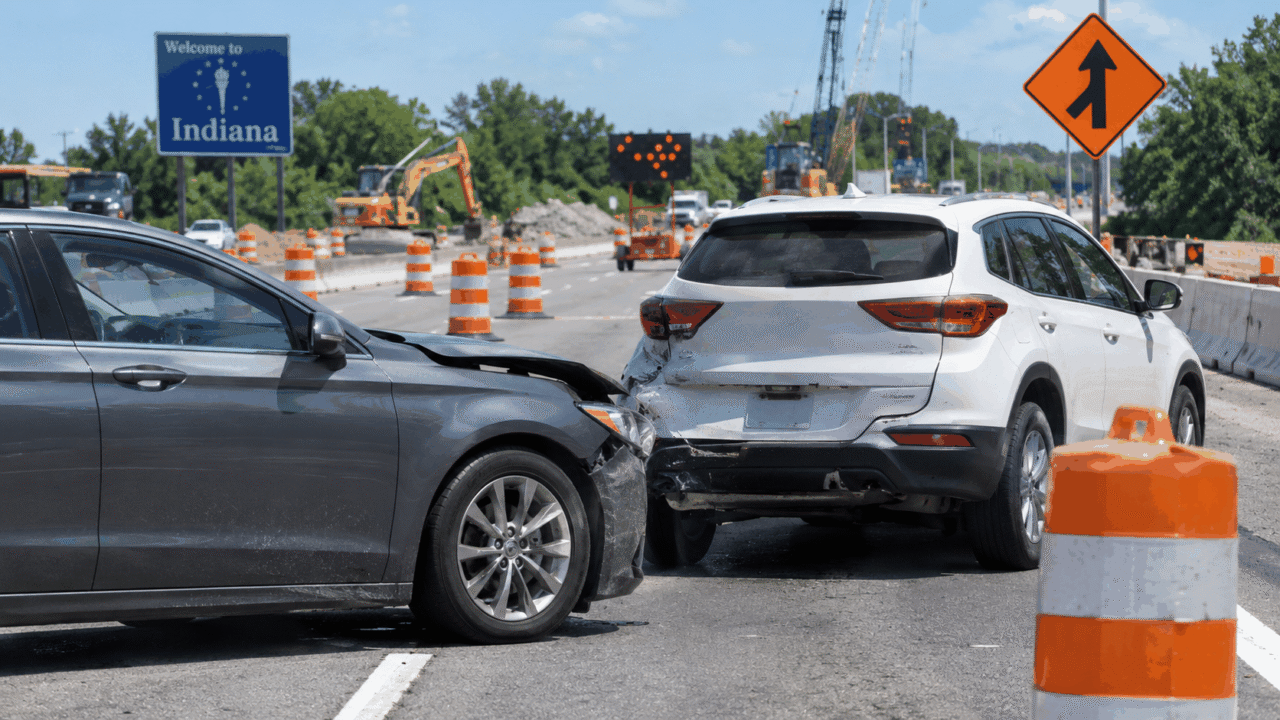
Construction zones are part of driving in Indiana for much of the year. Lanes shift, shoulders disappear, and traffic can stop with little warning. When a Fort Wayne car accident happens in one of these zones, the first question is often who’s at fault. Who’s responsible (liable) for paying for the injuries isn’t always clear. The at-fault party might be more than just the driver who caused the crash.
These questions come up more often than many drivers realize. Sixteen people were killed and 1,500 were hurt in Indiana work zones in 2025, state transportation officials told WPTA in Fort Wayne. Nationally, four out of five people killed in work zones are drivers and passengers, not road workers, according to the Indiana Department of Transportation (INDOT).
Our Fort Wayne car accident lawyers at Boughter Sinak, LLC look at everyone who may share the blame for a work zone crash. That can include the other driver, a construction company, or a government agency. Each one brings different rules and deadlines, so it’s important to know who you’re dealing with early.
|
Quick Facts
|
How Do Construction Zone Crashes Happen in Indiana?
One of the most common types of work zone accidents is a rear-end crash, INDOT says. Traffic slows or stops suddenly near the work area. A driver who is speeding, following too closely, or looking at a phone doesn’t stop in time. The result can be a chain-reaction crash involving several vehicles.
Lane shifts and narrow lanes cause problems, too. Drivers may drift into the next lane or clip concrete barriers when a lane suddenly bends. Distracted drivers, including those who are texting, are another common cause. Merging traffic can also lead to sideswipe crashes. INDOT says most fatal work zone crashes happen on roads with speed limits above 50 mph.
Indiana takes work zone driving seriously. A driver caught speeding in a work zone for the first time faces a $300 fine under the state’s work zone safety law. In most crashes, the driver who was speeding, distracted, or following too closely will be at fault. Still, the driver isn’t always the only one who made a mistake.
Can a Construction Company or Government Agency Be at Fault?
Yes. Even if another driver caused a construction zone accident, the companies and agencies that set up work zones might be at fault as well. Common reasons why construction companies or government agencies might share part of the blame include:
- Missing or Confusing Signs – Warning signs that are missing, hidden, or placed too close to the work area can leave drivers no time to react.
- Sudden Lane Shifts – Lanes that shift sharply without enough warning or clear markings can send drivers into barriers or other traffic.
- Poor Traffic Control – No flaggers, unprotected drop-offs, or equipment left in a travel lane can create hazards that drivers can’t avoid.
A private contractor often handles the daily setup of a work zone. INDOT, a county, or a city may also be responsible for the project. Figuring out who controlled the signs, barriers, and lane closures takes records that only those parties have. Those records should be requested quickly, before the work zone changes or disappears.
What Deadlines Apply to Claims Against INDOT or a City?
Claims against a government agency in Indiana fall under the Indiana Tort Claims Act. That law requires a written notice of the claim before any lawsuit can be filed. Notice of a claim against the state, including INDOT, must be filed within 270 days under Indiana Code Section 34-13-3-6.
The deadline is shorter for local governments. A claim against a city, county, or town requires notice within 180 days under Indiana Code Section 34-13-3-8. That’s only about six months. Missing either deadline can end the claim against that agency, no matter how strong the evidence is.
These claims have other hurdles, too. Indiana law protects government agencies from some types of claims. Notices must also be sent to the right offices and include specific information. A claim against a private contractor generally follows the regular two-year deadline for injury lawsuits, but evidence still fades quickly.
The time to act depends on who may be responsible for the crash. A claim can involve more than one of these parties at the same time, each with its own deadline.
| Who May Be at Fault | How They Can Share the Blame | Deadline to Act |
|---|---|---|
| Another Driver | Speeding, distraction, or following too closely | Two years to file a lawsuit |
| Private Contractor | Missing signs, sudden lane shifts, or poor traffic control | Two years to file a lawsuit |
| INDOT | Unsafe design or traffic control on a state project | Written notice within 270 days |
| City, County, or Town | Unsafe conditions on a local road project | Written notice within 180 days |
How Does Indiana’s 51% Fault Rule Affect a Work Zone Crash Claim?
Indiana uses a comparative fault system. Under Indiana Code Section 34-51-2-6, an injured person can’t recover anything if they’re more than 50% at fault. If they’re 50% or less at fault, their compensation is reduced by their share of the blame. Someone found 20% at fault would receive 80% of their losses.
Insurance companies for the at-fault party often use this rule to cut what they pay. They may claim the injured driver was speeding through the work zone or didn’t merge in time. Even a small shift in those percentages can cost an injured person thousands of dollars. Strong evidence about how the crash happened helps push back.
Claims against the government work differently. Indiana’s comparative fault law doesn’t apply to government agencies under Indiana Code Section 34-51-2-2. Instead, an older rule called contributory negligence can bar recovery if the injured person was even slightly at fault. That makes evidence about how the crash happened especially important in these cases.
What If a Road Worker Is Hurt in a Work Zone Crash?
Road workers in Indiana face real danger when drivers ignore work zone rules. Fortunately, an injured worker often has more than one way to recover compensation, including:
- Workers’ Compensation – Indiana workers’ compensation pays medical bills and part of lost wages, no matter who caused the crash.
- A Claim Against the Driver – Under Indiana Code Section 22-3-2-13, a worker can also bring a claim against a careless driver who caused the injury.
- Repayment to the Insurance Company – The workers’ comp insurance company may ask to be repaid from money recovered from the driver.
Workers’ comp doesn’t pay for pain and suffering. A claim against the driver, known as a third-party claim, can fill that gap. Handling both claims together takes care, since a settlement with the driver can affect workers’ comp benefits. That’s why it helps to have one legal team handling both.
One Firm for Both Sides of a Work Zone Crash
A work zone crash in Indiana can involve a driver, a construction company, and a government agency. Each one has its own insurance company and rules. You may be dealing with serious injuries while several legal deadlines are already running. Sorting out who’s at fault takes a fast, careful investigation.
Boughter Sinak, LLC handles both personal injury and workers’ compensation claims, so we can look at every source of compensation, whether you were driving through the work zone or working in it. Contractors often deny responsibility for these crashes. In one case, a general contractor denied all liability after incorrect markings at a road construction site led to a fatal crash, and we secured $950,000 for the family after years of litigation.
Don’t wait for an insurance company to decide who’s to blame. Talk with our team about what happened in a free consultation. We’ll explain your options, gather the evidence, and protect your claim before key deadlines pass.
“You made them pay combined costs with w/c medical, TTD, and personal injury settlement, an amount exceeding $833,300… Amazing… You’re the best! I knew I had the right litigator right from the start.” — Brian K., ⭐⭐⭐⭐⭐